The Problem
The first version looked promising but left users unsure what to do next. The assistant surfaced information outside the core journey, goal selection felt abstract, and key tasks were buried. Outcome: people did not immediately see how Jared would move them toward a concrete financial objective.
Mission Goals
Refocus the product on outcomes by centering goals and sequenced tasks, and by placing the assistant inside the flow where decisions happen. Make onboarding fast and targeted, surface the next action at all times, and connect guidance to measurable progress so users feel momentum from the first session.
I restructured the experience around clear goals and sequenced tasks, then placed the assistant where decisions happen. Users choose a goal, see the next step, and feel progress from the first session.
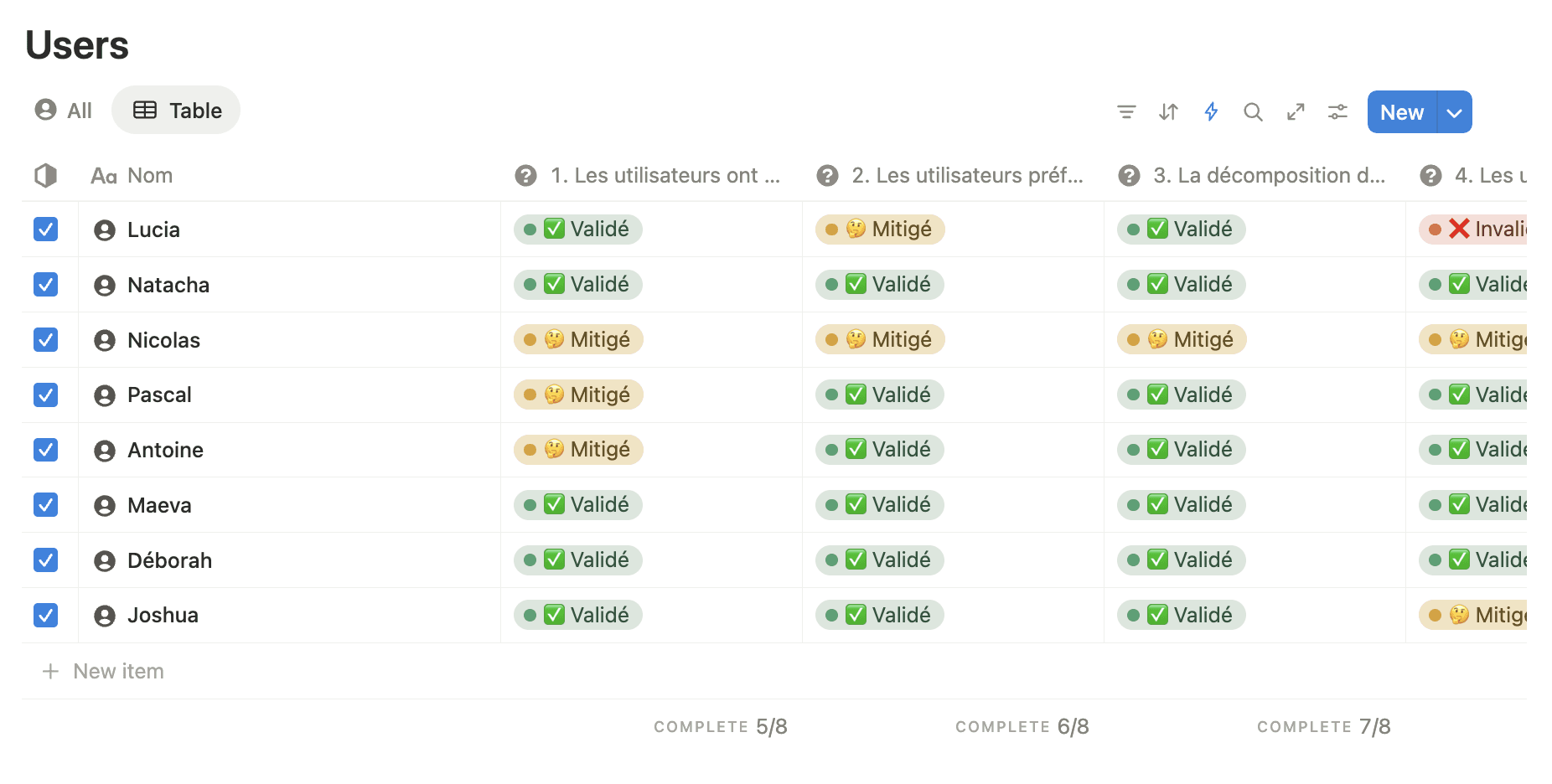
I led UX and UI, ran a three day research sprint, and set up a lightweight hypotheses database to align on real needs. Findings translated into onboarding, goals, tasks, and assistant flows that the team could ship.
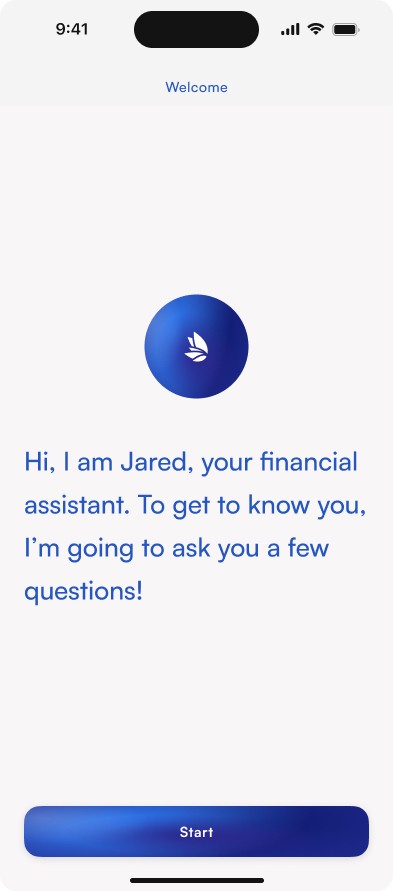
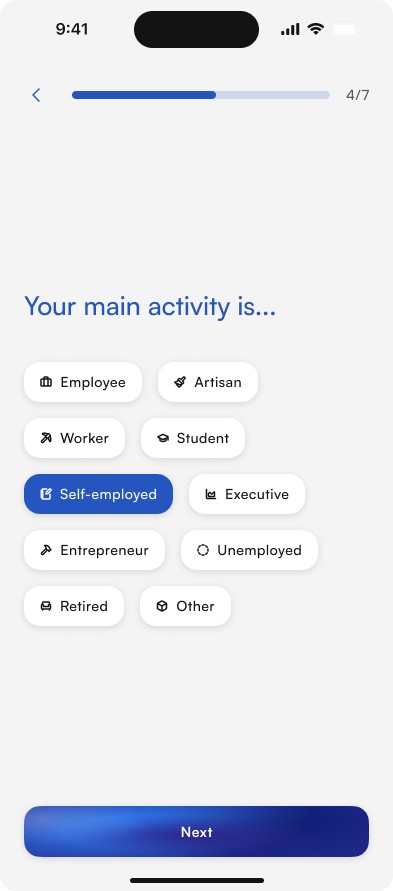
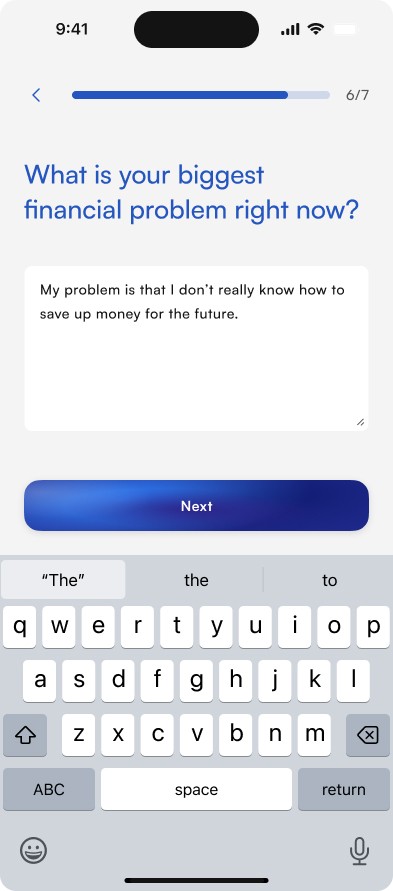
A short conversational start, then single question steps with native inputs. This keeps focus high, collects the facts that matter, and personalizes goal suggestions without slowing users down.
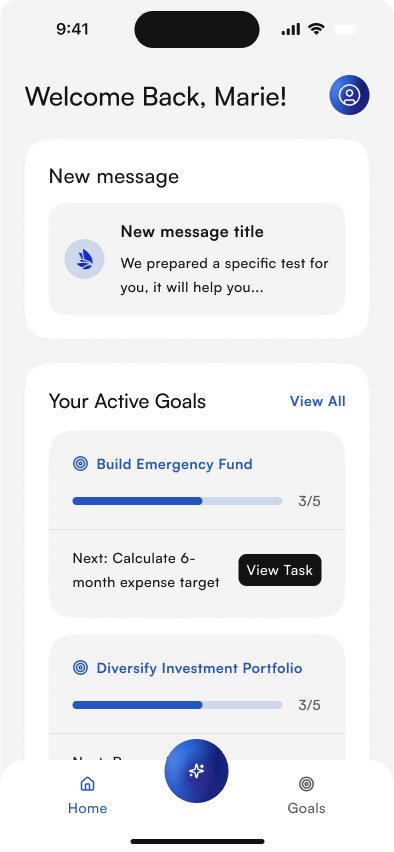
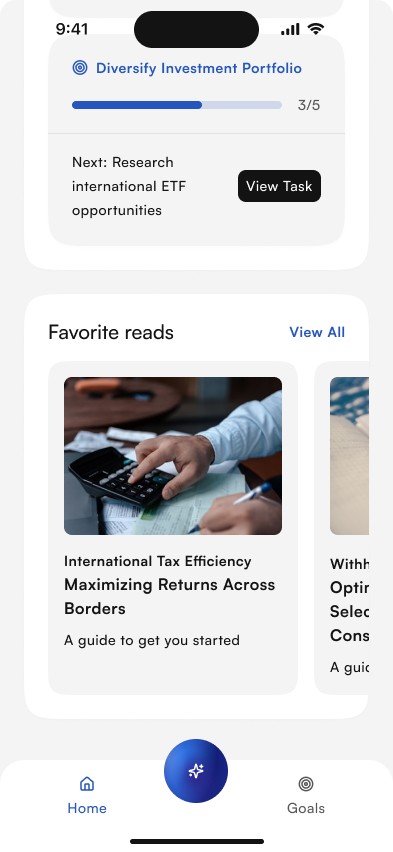
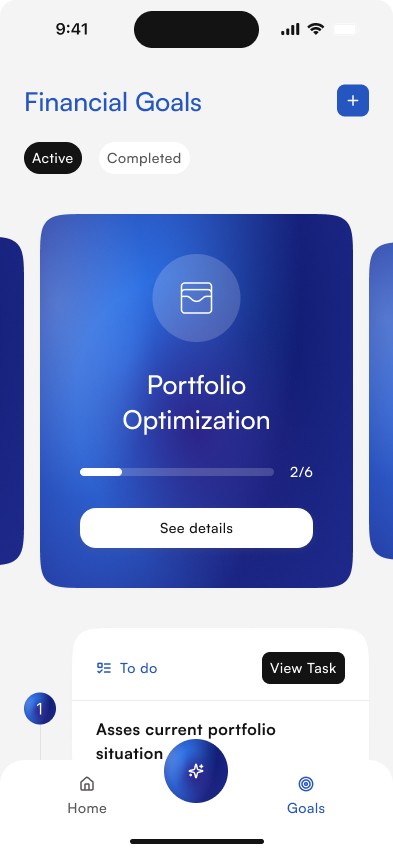
A goals carousel shows progress at a glance with the task list directly underneath. Each task has a clear description, focused resources, recommended experts, and quick actions to ask Jared or mark as completed. Momentum is built into the layout.
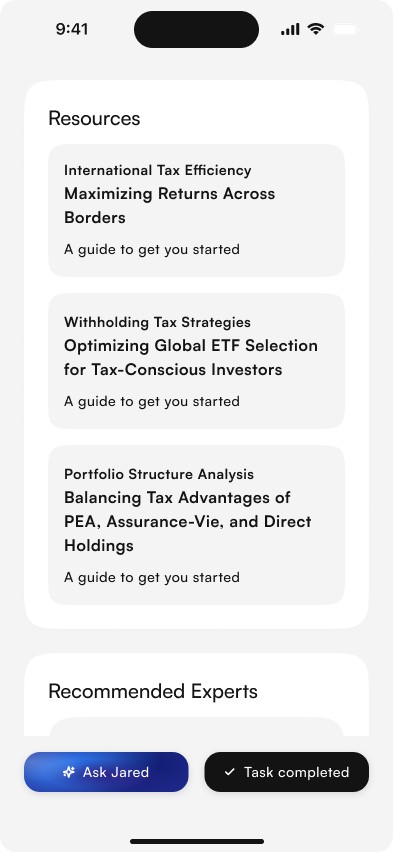
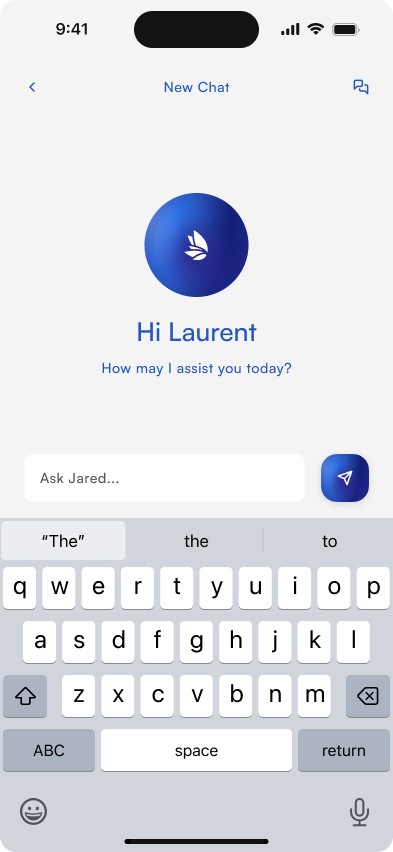
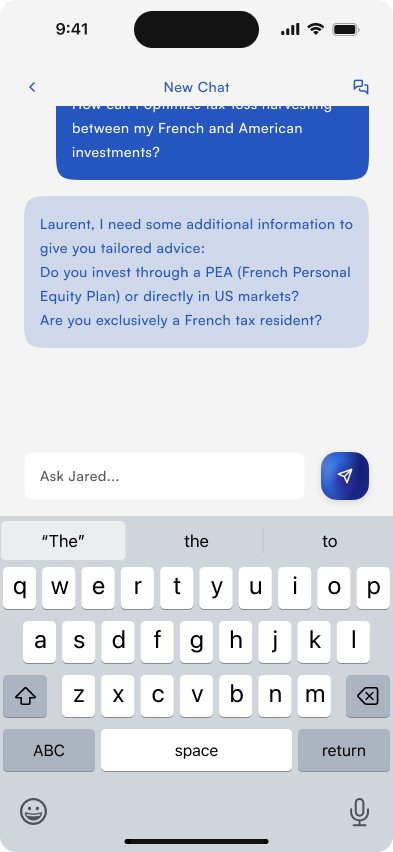
The assistant is available across the journey. Open it from Home, from a goal, or inside a task. Ask any question and it uses the current context to give guidance that links back to the next action.